Home/Research
Research

Making knowledge reachable.

I study how scholarship is produced, published and accessed, and how generative AI is changing the university. Click any paper to see what it asks, how, and what it found.

8Papers & manuscripts
959Survey respondents
2Lead research themes
1Best Paper Award
Research map

A living map of my work

Every paper is linked to the themes it speaks to. Hover to trace connections; click a paper to open it below.

Hover to trace links · click a paper to open it
SciSciAI + HEInfo BehaviorFake NewsLibraries
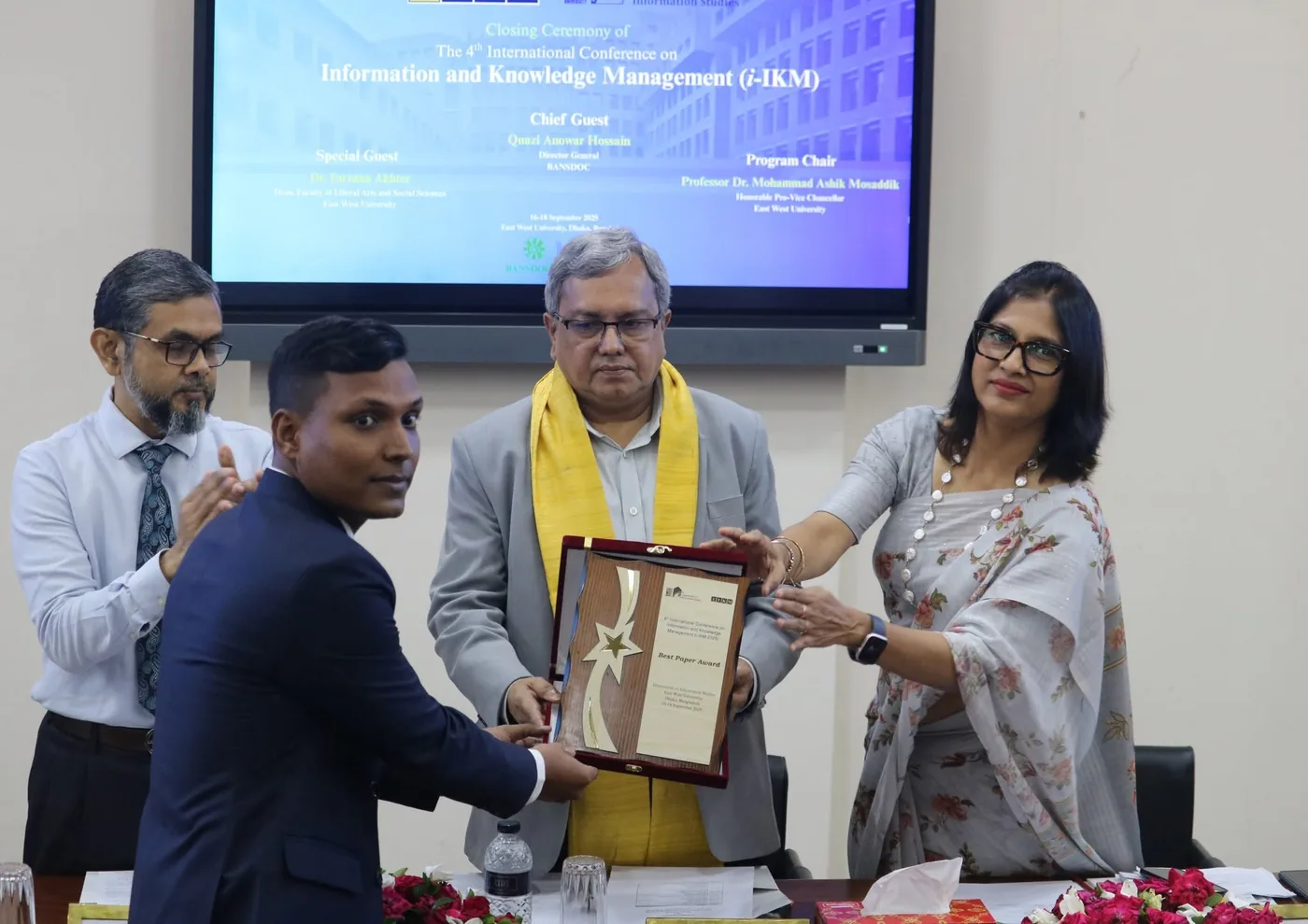
Md Liton Ali receiving the Best Paper Award at IIKM Best Paper · IIKM 2025
Award-winning work

GenAI: stay out of it, or find a suitable way in?

A policy review of how academic publishers and universities are responding to generative AI. It asks whether institutions should keep GenAI out of scholarship altogether or find suitable ways to incorporate it, and it won the Best Paper Award at the International Conference on Information and Knowledge Management (IIKM) in 2025.

  • Bridges both lead themes: AI in higher education and the science of science
  • Covers both sides of scholarship: publishers and universities
  • Published in the IIKM proceedings, 4(1), 65–66
Read the summary
Now

Work in progress

In progress

AI and university students' academic performance

A research project on how AI tools affect the academic performance of university students.

In progress

Systematic review: GenAI in second-language speaking

Mapping the pedagogical designs and roles of generative AI in L2 speaking learning, guided by the task-based language teaching framework.

Planned

Systematic review: AI in higher education

A systematic review of research on artificial intelligence across higher education.

Ongoing

Zero-budget digital library framework

A framework that lets school and college libraries in Bangladesh and other low-resource settings build digital services at zero cost, using free tools and minimal technical skill.

Publications

Papers & proceedings

Expand any entry for a plain-language summary, method and findings, plus one-click APA and BibTeX.

4
2023
1
2024
2
2025

What it asks

A policy review of how academic publishers and universities are responding to generative AI, set around the question in the title: should institutions keep GenAI out of scholarship, or find a suitable way to incorporate it?

Approach

Policy review of academic publishers' and universities' published positions on generative AI.

Status

Presented at the conference; full findings are in the paper.

Google Scholar

What it asks

Evaluates how well an AI-powered chatbot advances user support in academic libraries, asking whether conversational AI can extend the reach of reference and help services.

Approach

Effectiveness evaluation of an AI-powered library chatbot.

Status

Presented at the conference; full findings are in the paper.

Google Scholar

What it asks

Examines how University of Dhaka students perceived the forced shift to electronic learning during COVID-19, and which technological, pedagogical, institutional and individual factors shaped their acceptance of it.

Approach

Cross-sectional online survey of 412 University of Dhaka students; closed questions analysed in SPSS, open questions coded thematically.

412respondents

Key findings

  • Performance expectancy, social influence, facilitating conditions, perceived usefulness and ease of use shape acceptance of e-learning.
  • Individual innovativeness and e-learning preparedness positively influence adoption.
  • Closing the digital divide, building digital literacy and involving students in e-learning policy could improve outcomes.

What it asks

Studies the culture of knowledge and information sharing among students living in 16 dormitories of a large public university in Bangladesh, and how it varies by gender, discipline and degree level.

Approach

Structured questionnaire; 337 usable responses from 16 dormitories; descriptive statistics, t-tests and ANOVA in SPSS.

337respondents

Key findings

  • Students share knowledge and information with peers frequently; about 30% do so “very often”.
  • 85.46% see knowledge and information sharing as important for career development.
  • Male students report sharing more often, and attitudes differ significantly by gender; discipline shows no significant difference.
  • Top barriers: low awareness of knowledge sharing and social media addiction.

What it asks

Uses webometrics to map worldwide usage and growth of Library Genesis and Sci-Hub, the shadow libraries that researchers turn to when scholarly publications are priced out of reach.

Approach

Webometric analysis using LibGen and Sci-Hub databases, SimilarWeb web analytics and Sci-Hub download logs, with quantitative and qualitative analysis (data to 2022).

Key findings

  • LibGen and Sci-Hub show a remarkable surge in popularity despite copyright disputes and restrictions.
  • Users come from many nations, including developed countries such as the USA.
  • Science and technology dominate downloads, with medicine the most sought-after field.
  • High prices and limited availability of scholarly publications are the two main drivers.

What it asks

Conference presentation of the LibGen and Sci-Hub webometric study, highlighting what shadow-library usage reveals about pricing, access barriers and traditional publishing models.

Approach

Webometric analysis (LibGen and Sci-Hub databases, SimilarWeb, Sci-Hub download data).

Key findings

  • Downloads frequently come from highly regarded publishers and journals.
  • Implications for policymakers, publishers and researchers addressing demand for affordable scholarly access.
Google Scholar

What it asks

Explores how religious information shapes the personal morality and political beliefs of Bangladeshi citizens, in a country where religion plays a central role in society and politics.

Approach

Online survey of 210 respondents (convenience sampling), five-point Likert scale, Mann–Whitney U and Kruskal–Wallis tests.

210respondents

Key findings

  • Religious information has an impact on Bangladeshi citizens' morality and political beliefs.
  • Opinions differ significantly by educational level, current residency and information literacy.
Google Scholar

What it asks

Investigates how university students perceive and practise the ethical use of academic library resources and services.

Status

Currently under peer review.

No works match that filter.

Beyond papers

Also in the lab

Zero-budget digital libraries

An ongoing framework that lets school and college libraries build digital services with free tools and minimal technical skill.

Peer reviewer

Global Knowledge, Memory and Communication, Emerald Publishing.

Google Scholar

Follow new work and citations as they appear. Interests: Information Behavior, Science of Science, Fake News, Artificial Intelligence, Education.

Open to collaboration

Collaboration & correspondence

I welcome conversations about research collaboration, scholarly communication, AI in higher education and library digitization.